

A Robust General Insurance Planning Software
REPLAN for General Insurance Business Planning
REPLAN - Robust Airline Business Planning Solution
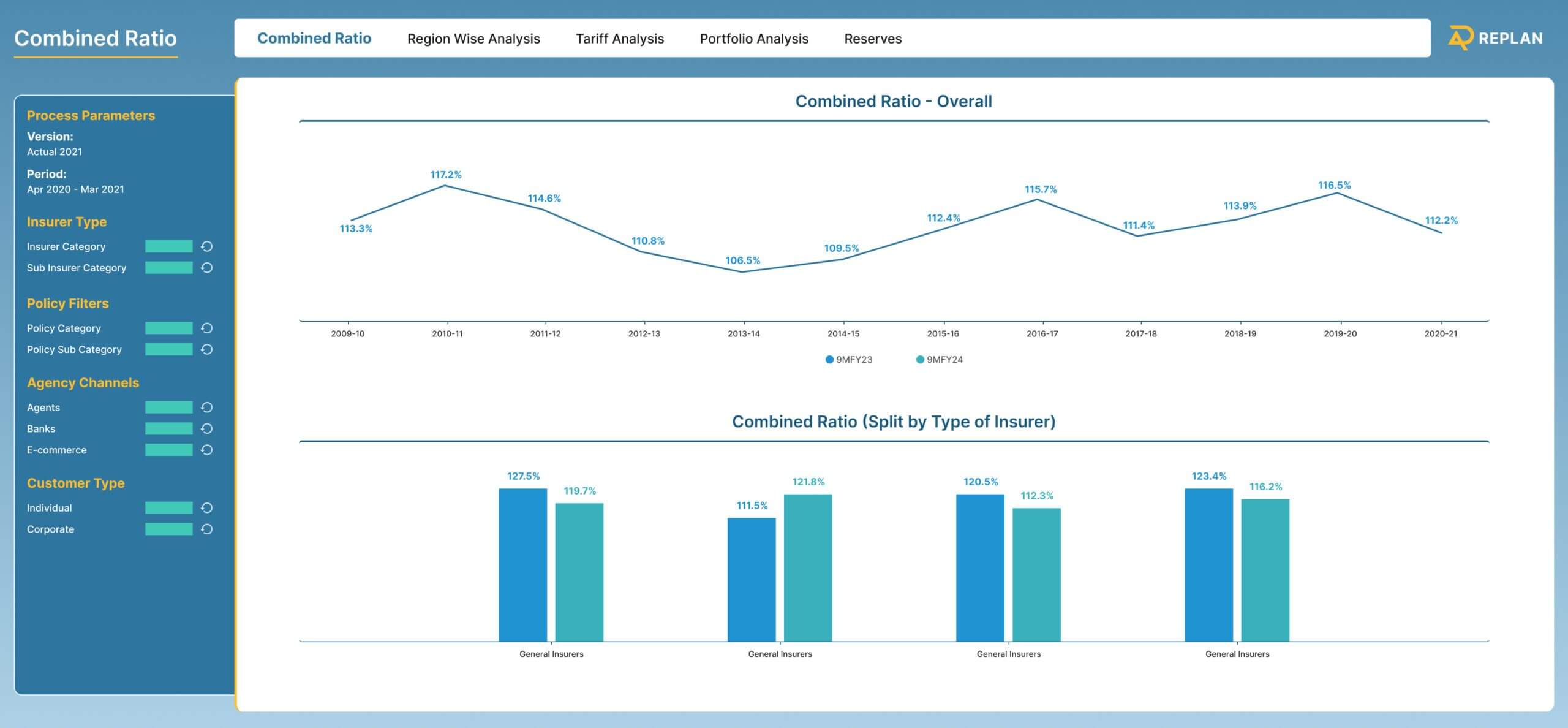
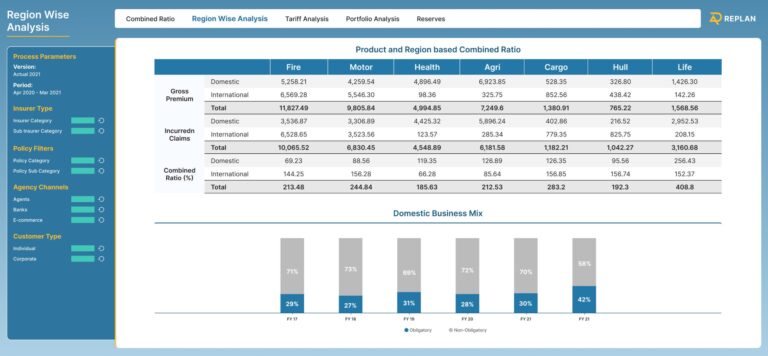
Combined Ratio
Measures profitability by comparing underwriting losses and expenses to premiums earned. A ratio below 100% indicates underwriting profit, above 100% signifies a loss. It analyzes expense drivers and claim trends to identify cost-saving opportunities and improve profitability.
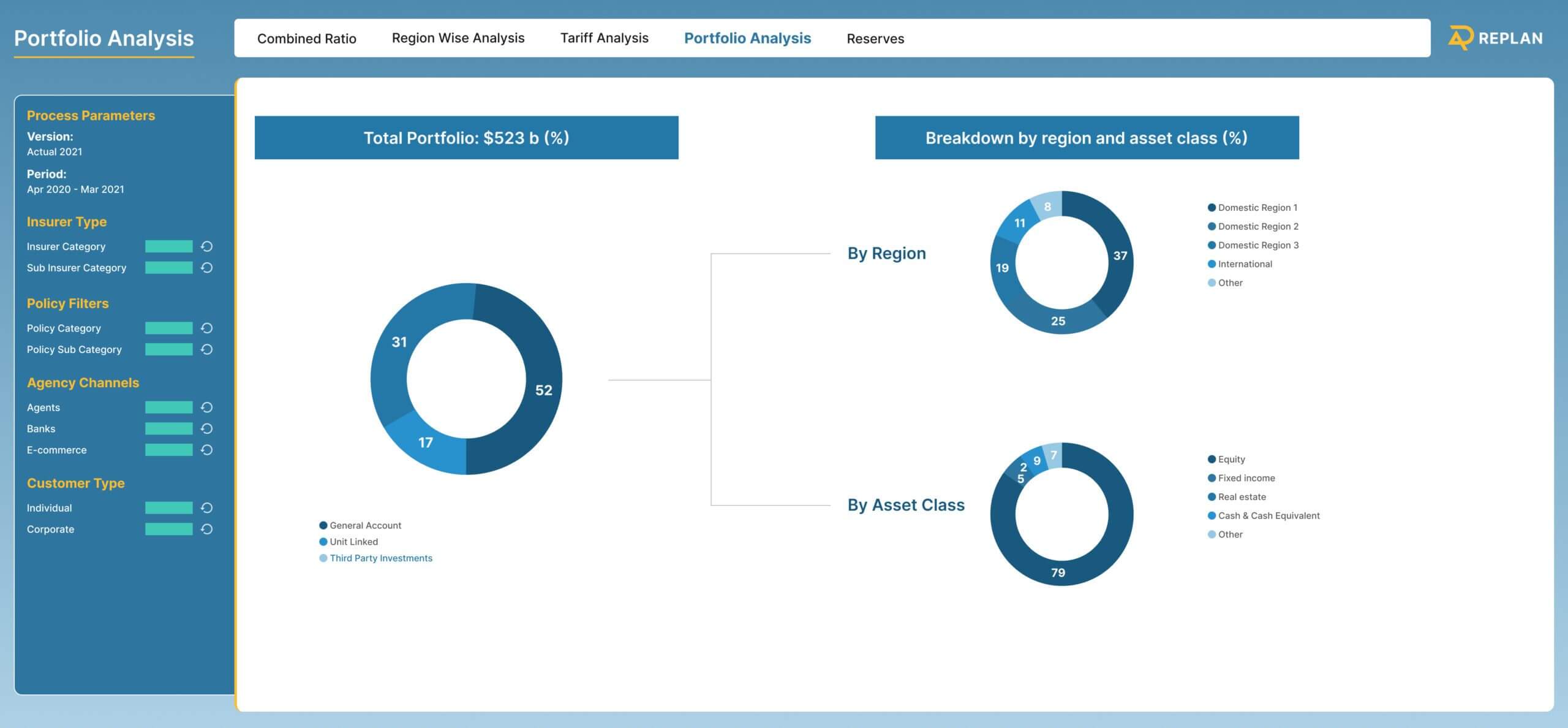
Assets Under Management (AUM)
Tracks the total value of the company’s invested assets (premiums collected). The business monitors AUM growth to assess premium collection and project future investment income. AUM is also considered when setting risk tolerance levels for investment decisions.
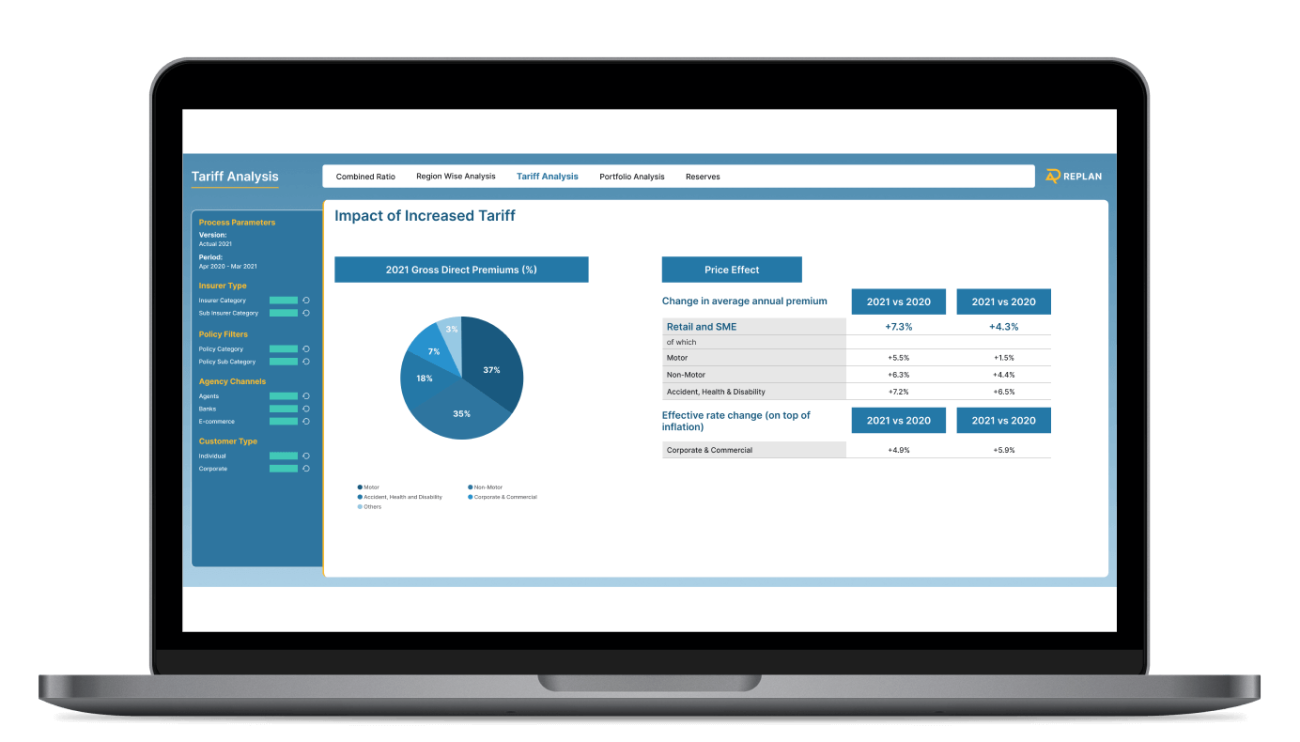
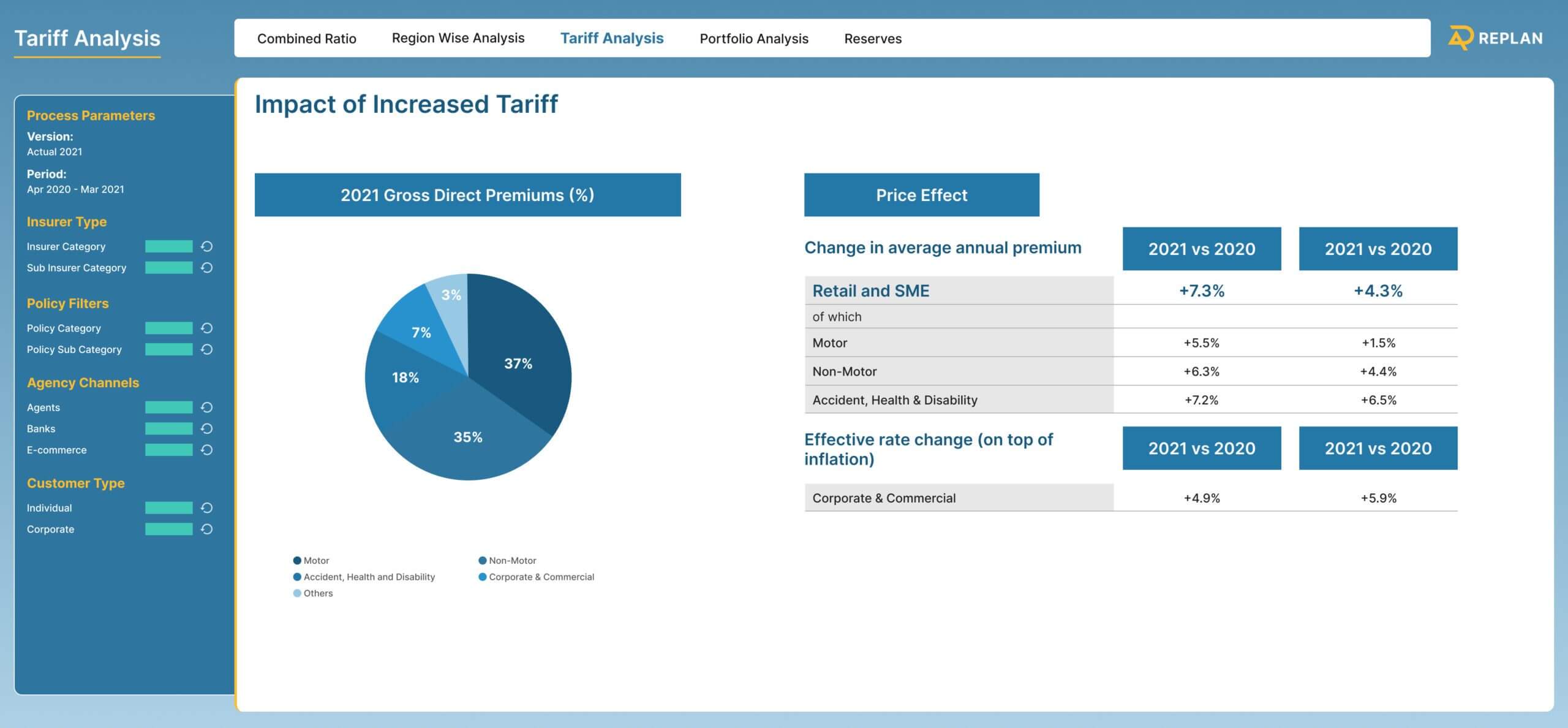
Effective Tariff
Represents the average premium rate actually charged to customers, compared to the base or published rate. It reflects how effective tariffs affect profitability alongside risk profiles. The business may identify opportunities to adjust pricing strategies for different customer segments or risk categories.
Financial Planning For Aircraft Related Fixed Costs
Refers to the distribution of premiums across different insurance lines (e.g., auto, property, health). The business can evaluate the profitability and risk associated with each business line within the mix. This helps optimize product offerings, identify areas for expansion, and manage overall portfolio risk.
Realized return and Investment Leverage
Realised return directly affects a general insurer’s profitability. Strong realised returns can contribute to underwriting profitability by generating additional income and vice-versa. Investment leverage refers to the use of debt financing to amplify investment returns. In general insurance companies, this is less common than in other industries due to the need for solvency and regulatory constraints.
REPLAN - General Insurance Business Planning with Ease
Some Features of General Insurance ERP Software
Our Solution Helps retailers stay ahead of demand and deliver excellence.
Gross Written Premium (GWP)
Gross Written Premium (GWP) reflects a firm's risk underwriting capability and income generation strength. Precise calculation of GWP enables insurers to gauge performance relative to competitors, optimize pricing, and maintain solid financial standing. With close examination, companies can make data-driven choices, enhance underwriting processes, and much more.
Reinsurance
Reinsurance transfers part of the risk to other insurers, lowering the financial impact of big claims. This strategy ensures an insurer's stability, affects revenue planning, and reduces exposure to major losses. Reinsurers enable primary insurers to efficiently use capital and underwrite more business by minimizing the effect of catastrophic events on their finances.
Net Written Premium (NWP)
Net Written Premium (NWP) is a vital financial metric that signifies an insurer's actual revenue post-deductions of reinsurance costs and charges. Accurate calculation of NWP helps assess profitability, gauge risk management efficiency, and inform decision-making regarding resource allocation, pricing optimization, and strategic alignment.
Commission Charges
Brokers and agents, who distribute and sell insurance products, earn commissions that need accurate assessment and management for effective financial planning. Balancing these expenses is crucial to maintaining profitability and achieving strategic goals, as well as enhancing customer acquisition and staying competitive in the evolving insurance industry.
Net Earned Premium (NEP)
Net Earned Premium (NEP) is the share of premiums earned by insurers after considering reinsurance and adjustments. It reflects actual revenue from underwriting. Accurate NEP calculation helps evaluate underwriting strategy effectiveness, set prices, manage risks, and measure returns. Monitoring NEP is crucial for insurers to adapt to market changes, address new risks, and ensure financial stability.
Asset Liability Management (ALM)
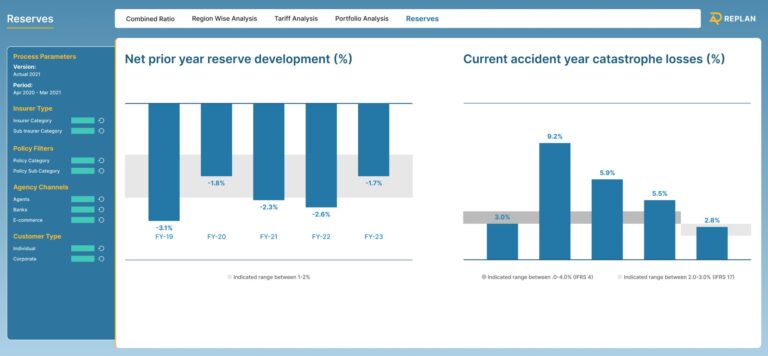
General insurers collect premiums upfront but pay out claims over time, often years later. This creates a mismatch between cash inflows and outflows. Market fluctuations can further complicate this by impacting investment returns. ALM helps general insurers manage this risk by strategically aligning their assets with their liabilities. It ensures the company has sufficient funds to meet its obligations while optimizing investment returns.
Key Benefits of Replan
Blog & News Update

Why AUM Matters and How It Reflects Financial Health
When you look at how well a fund or investment firm is doing, one key number stands out Assets Under

Understanding Embedded Value Reports in Life Insurance Companies
Life insurance companies operate in a unique way compared to other financial institutions. Their business revolves around long-term commitments, policyholder